FI stole my motivation, but I'm not complaining
Picture it. Albuquerque, 2016.
I was at the office from seven in the morning to seven at night, then straight to dinner with Daniel, my husband and co-founder, where we would spend the entire meal strategizing. Clients, employees, the problem of the week, all of it, until ten or eleven at night.
We ate at whatever Chili’s or Applebee’s was still open, because in Albuquerque nothing else is at that hour, and it was terrible for us. We drank one too many La Cumbre Elevated IPAs, or two too many, to take the edge off the stress while we did it.
Then I woke up and ran the whole thing again. That was my life, for years, and I chose it on purpose.
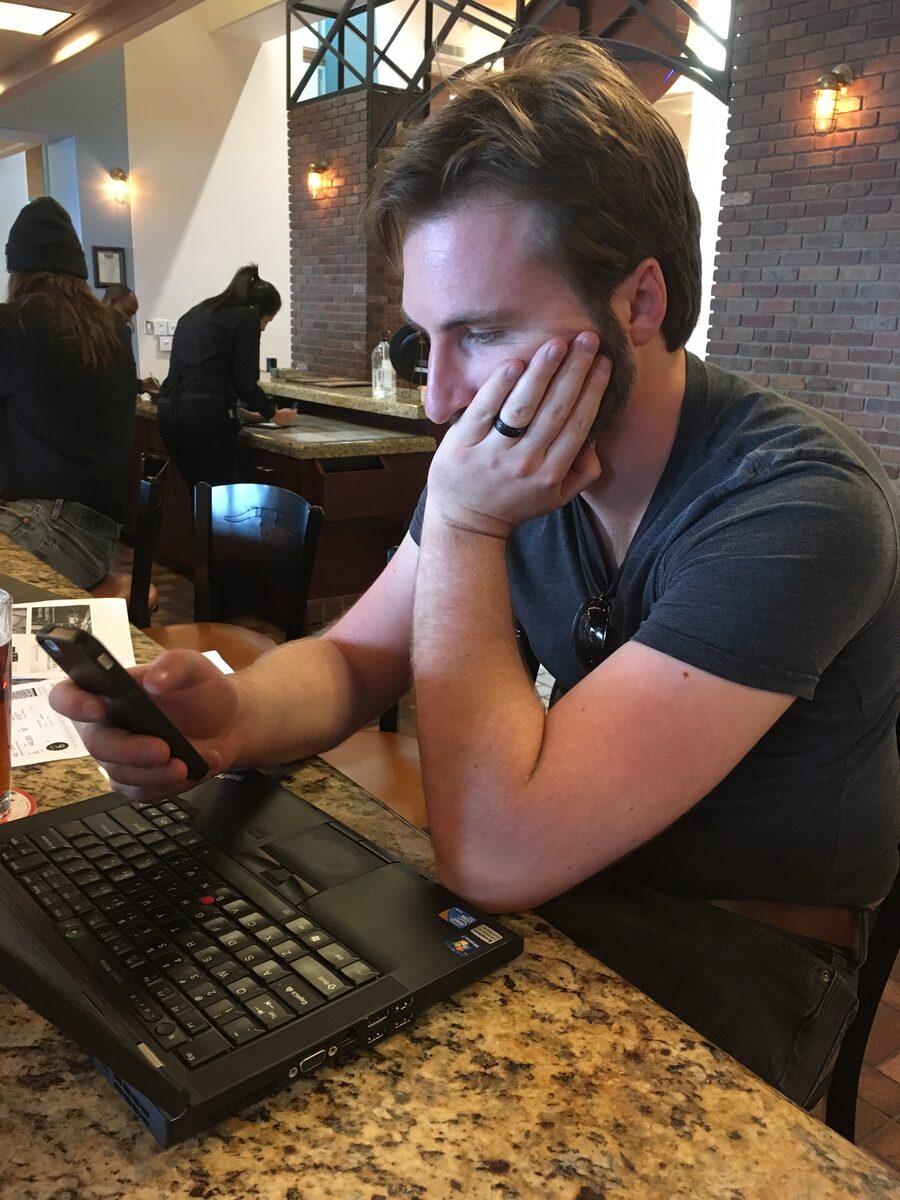
So of course we hardly ever cooked. Cooking was a bad use of the hours we had when there were clients paying more than dinner cost and a company that needed building. Opportunity cost ran both our lives all the way down to what was on our plates.
But these days, things look a little different. We cook at home most nights (well, let’s be honest, Daniel does the cooking, but I help with the eating). Slowing down enough to have a kitchen that actually gets used was a decision we made together, and he is the one who turned it into real food on the table. I just stopped pretending a restaurant was the only rational thing to do with an evening.
I also take a month off every year now. One stretch, not chopped up into long weekends, and I spend it wandering around Asia or Europe. I do not clear it with anyone. The younger version of me could not have afforded the time or the money, and would have found the whole idea offensive.
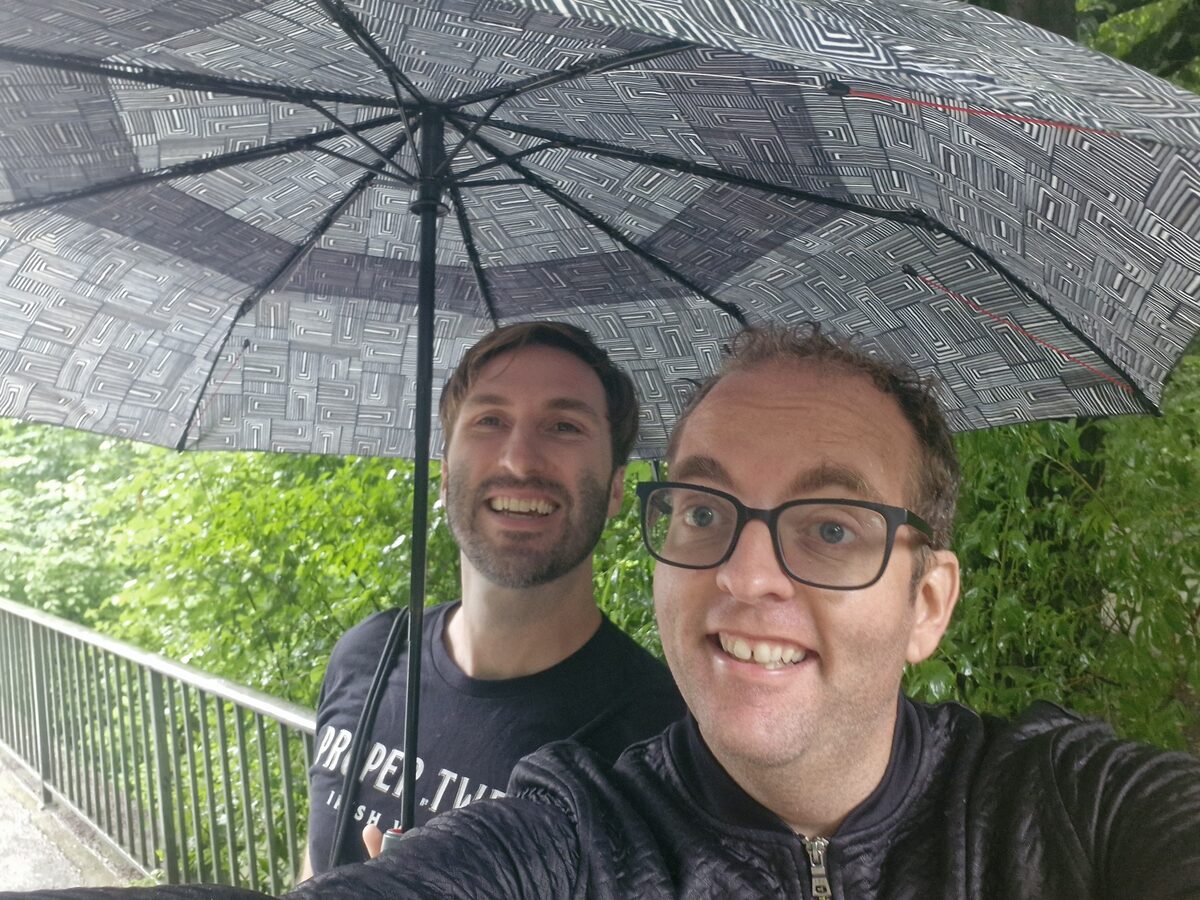
Same person. The thing that changed is a number in a bank account. And that number changed less than you would think.
Financial independence. The point where what you have invested covers what you spend, and working becomes optional. The rough yardstick is twenty five times your annual spending, on the theory that you can draw about four percent a year and never run out. It is not retirement. Most people who get there keep working. They just stop needing to.
Here is the story people tell about that number. Get financially independent, and you become a better, braver founder. You take bigger swings. You build with confidence because you are not scared anymore.
I want to argue close to the opposite. Financial independence makes you complacent. It promotes sloth. It reaches into the thing that got you out of bed and quietly switches it off.
But nobody arrives at FI carrying only money. FI demotivates. The resources dominate. And everyone watches the second act go well and hands the credit to the money.
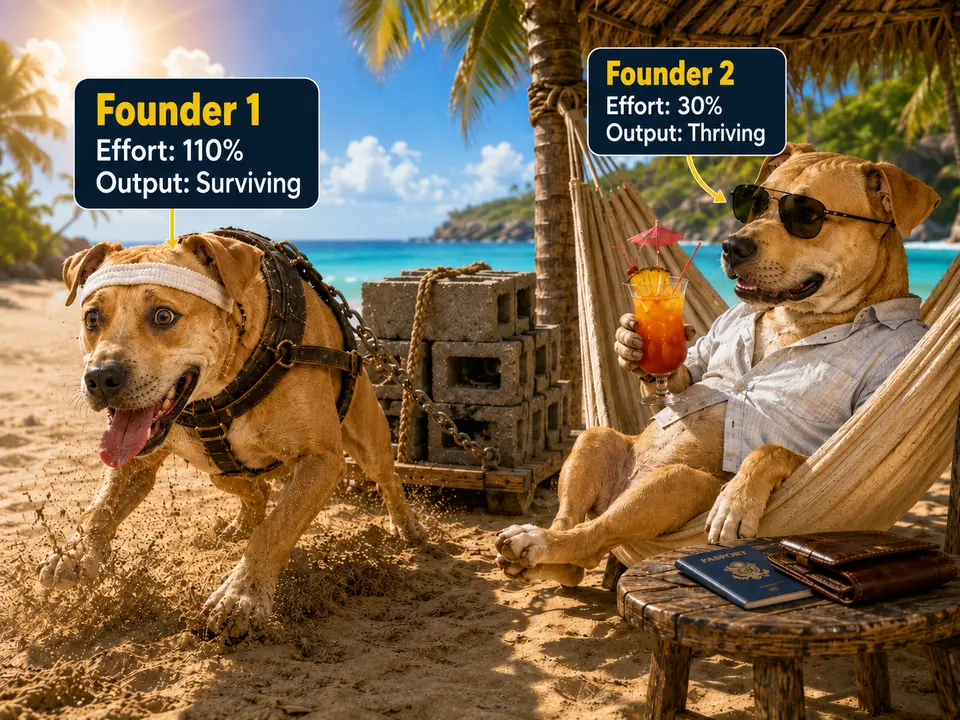
Two founders
Imagine, if you will, two founders. The first is starving, driven, and up before the sun. The second is comfortable, well fed, and frankly a little lazy. Which one makes the better founder?
The answer might surprise you.
Founder one: the hungry one
He is young and scrappy. Hungry, if you will. He has jet fuel in his veins and the focus of a hunting dog. He has to. He has to work to eat. There is no option to fail because there is nothing to fall back on. No cushion. No savings. No plan B.
That was me for years. Driven, and also broke and wet behind the ears. I had all the fuel and none of the other resources I needed.
And that same necessity quietly caps how big you are allowed to think. When rent is due, you cannot be patient. You cannot work on the thing that pays off in three years, because you will not survive three years. You cannot touch anything that does not cashflow soon, so you take the smaller, safer, high-percentage shots, the ones that keep the lights on this quarter.
The hunger everyone romanticizes is also a leash. It forces you to trade the big, slow, potentially enormous bet for the small sure one, every single time, because the small sure one is the only kind you can afford to make.
Founder two: the comfortable one
He is established, later-career, financially independent. Comfortable, if you will. He has nothing left to prove and no particular reason to be up before the sun. He already did the hard part once, and the money is handled.
Someone, as it happens, a lot like me now.
The jet fuel is gone. I could still put in the brutal hours, but I don’t. I won’t. I don’t have to.
I spend my weekends, and sometimes my weekdays, by the pool watching the world go by. I play with my dog. I take long vacations and I have started leaving the laptop back at the hotel, though I am not ready to leave it at home. Let’s not get crazy.
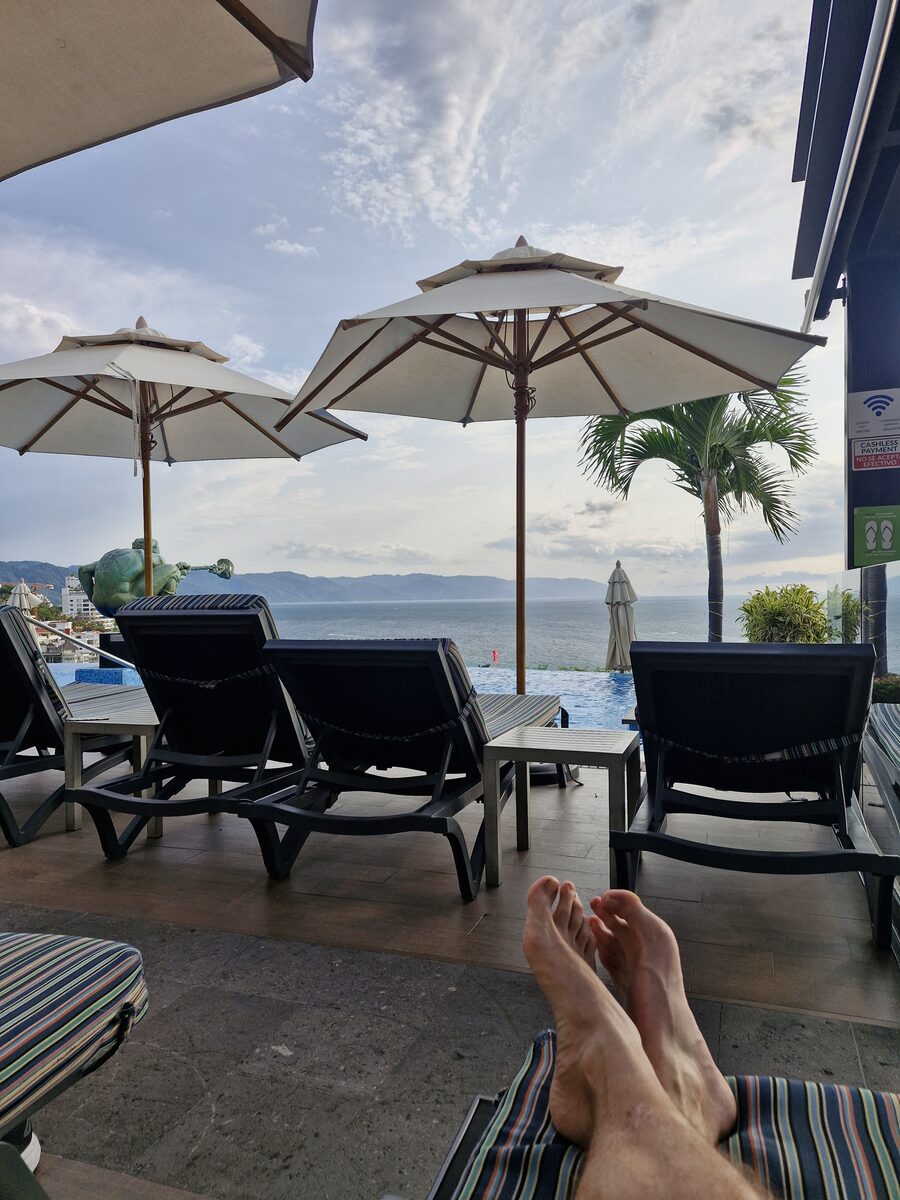
I will say this plainly: I have gone soft. Real soft.
So how does someone with that little drive still build anything?
Drive is what made me successful in the first place, but as Marshall Goldsmith put it, what got you here won’t get you there.
The part of me that had no choice has completely atrophied, and in its place I have every resource that hungry younger founder was missing. The money. The reputation. The network. The scars. And, most importantly, the pattern recognition that only comes from having built the thing once already.
Some harmful FI-ed effects
So here is the damage. FI did not make me brave. It took the fear away, and the fear was the fuel. Financial independence, all by itself, is not an accelerant. It is a sedative. It is the single most demotivating thing that has ever happened to my work ethic, and I would not give it back.
That is the part people get backwards. They watch a resourced founder move with more confidence and they conclude the money bought the confidence. The money bought the calm. The confidence, if it is real, came from somewhere else entirely.
Look at the founders who hit their biggest wins in their forties and fifties. Plenty of people wave it off as compounding, that they simply had more money for longer and the snowball was already rolling downhill on its own. I think that misses it.
They had the money to make the bet, sure. They also had the connections to open the first doors, the reputation to get the meeting, and the judgment to know which long shot was worth the weight. The reason they launched that particular thing later in life is that it was risky, and everything they had accumulated by then is what let them go all in on it even though it was not a sure thing.
What looks like the patience of age is usually just the freedom to place a bet a broke person could never afford to make.
Separate the tax from the prize
The reason the second founder still wins is not the FI. It is the resources. Those are two different things that happened to show up together.
Pull them apart and it gets obvious. The FI is a detriment. It killed the drive. The resources make everything easier, and they let me do more with less motivation.
Experience means I get the same result without the twelve hour days. Money means I can wait out the stretches where nothing is working. A network means a hard problem is often one phone call from solved.
Not being ground down by cashflow terror, which was a constant misery from the day we opened Iterative to the day we sold it, means I am still standing and clear headed and able to make the next call well.
And then there is the resource I think is the most underrated of all. Reputation. Pedigree.
Selling a company puts you in a small club, and I know how differently people treat that club because I catch myself doing it. When I meet someone who has built and sold something, I give them a deference I do not hand out to everyone. I put them in a different league before they have said much of anything, and I extend a trust up front that I would make a stranger earn.
The doors that used to take months of proving myself now tend to open a little earlier, and a little easier. Reputation opens doors that hunger used to have to kick down.
It is not fair, and you cannot hustle your way into it overnight. It is bought with a track record, and it is one of the largest things the second founder carries with him.
Put the two founders side by side. Jet fuel and no resources, or no jet fuel and every resource.
And the honest answer, the one nobody who romanticizes the scrappy underdog story wants to hear, is that the resources win. Probably by a lot. Drive is cheap. Judgment and a war chest and a network are not.
So why build at all
If the money is handled and the fire is out, why start another company?
I would be lying if I told you we do it for the money. I would also be lying if I told you we would not be thrilled to death by a seven or eight figure payday.
When somebody asked Rockefeller how much money was enough, he said, just a little bit more, and I feel that pull as much as anyone ever has.
StriveDB is case management software for victim services organizations, and Daniel and I have been building it slow and sustainable for a couple of years. We built it because we want to help people. While it might some day make a lot of money, that is not why we do it.
Most founders are looking for an easy exit. We’re not. We would only consider a sale if we knew the team taking it over was going to maintain it, run it, and keep it mission focused on serving victims. Not buy it to squeeze it dry, not run it into the ground, and not quietly acquire it to kill it.
That matters more to us than the size of the check, and it is the kind of thing you only get to insist on when you are not desperate for the money.
Some of the reclaimed energy goes somewhere better than another company, too. I lift weights now, seriously, in a way the founder who ran on four hours of sleep never had the room for. I have put real time into my health instead of quietly borrowing against it every night. I am learning several languages and the piano, slowly and badly and happily.
Every bit of it is the kind of thing the opportunity cost equation that kept me eating Chili’s and Applebee’s would never have allowed. None of it shows up on a cap table, and all of it is part of the life the resources actually bought.
The verdict
Necessity is not a virtue. It is just necessity, and the entire point of it was to earn your way out of ever needing it again.
If you are young and scrappy right now, use the fear. It is doing real work for you, and you will never have it this cheap again.
Just do not mistake it for the destination, and do not buy the survivor’s myth that the person with resources is coasting. They put in the time and the tears that you are putting in right now. They already grew the way you are growing right now. And now they are making the smarter, better, long term bets that are still in your future.